


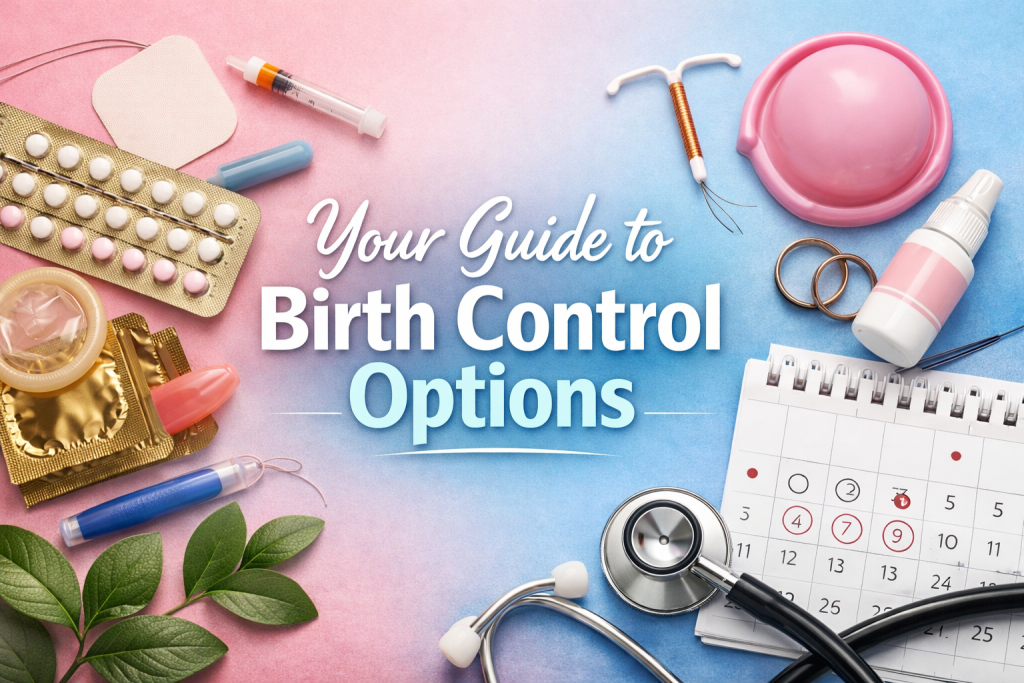
Many people search online for the best type of birth control, top rated birth control, or the healthiest contraception method. That sounds logical, but the premise is flawed. There is no universal best birth control. There is only the best option for you based on your body, lifestyle, goals, and risk factors.
What works well for one person may be a poor fit for another. A method praised online may cause side effects for you. A highly effective option may fail if it requires habits you cannot realistically maintain. A hormone free method may sound appealing but may not offer the convenience or protection you need.
This is where contraceptive counseling matters.
Instead of guessing, copying friends, or trusting random internet opinions, contraceptive counseling helps match the right contraception choices to your real circumstances. That means fewer mistakes, better consistency, and a lower chance of unplanned pregnancy or dissatisfaction.
This guide explains how contraceptive counseling works, compares birth control methods, breaks down the most effective options, and helps you choose a good birth control method that actually fits your life.
What Is Contraceptive Counseling?
Contraceptive counseling is a professional consultation with a qualified healthcare provider to help you choose, start, review, or change a birth control method.
It is not just being handed a prescription. Good counseling is strategic decision making based on evidence.
What Happens During Contraceptive Counseling?
A proper consultation may include:
- Review of your medical history
- Discussion of current medications
- Pregnancy goals now and later
- Lifestyle habits and routine consistency
- Sexual health and STI risk
- Past side effects with contraception
- Concerns about hormones or procedures
- Cost and access considerations
Why It Matters
Most birth control dissatisfaction comes from poor matching, not bad products.
People often choose methods because:
- A friend recommended it
- It is popular online
- It sounds easiest
- They were rushed through a consultation
- They did not understand side effects or maintenance
That leads to missed pills, early discontinuation, poor adherence, or frustration.
Good counseling reduces avoidable mistakes.
Why There Is No Single Best Type of Birth Control
Many people ask, “What is the best birth control?” Wrong question.
Ask instead:
- Best for avoiding pregnancy?
- Best for hormone sensitivity?
- Best for convenience?
- Best for STI protection?
- Best if pregnancy is wanted soon?
- Best for heavy periods?
- Best with migraines or blood pressure concerns?
Each question can lead to a different answer.
Example
A person who forgets daily tasks is a weak candidate for the pill.
A person with new or multiple partners may need condoms for STI protection.
A person wanting long term low maintenance contraception may prefer an IUD or implant.
There is no trophy winner. There is only fit.
Main Types of Contraception Choices
Understanding categories helps you compare realistically.
Long Acting Reversible Contraception (LARC)
These methods are highly effective and low maintenance.
Hormonal IUD
Placed in the uterus by a clinician. Can last years depending on type.
Copper IUD
Hormone free option that also lasts years.
Implant
A small rod placed under the skin of the arm.
Why LARC Performs Well
Because it removes user error. You cannot forget a device already in place.
Short Term Hormonal Methods
The Pill
Taken daily.
Patch
Changed on a schedule.
Vaginal Ring
Inserted and replaced on schedule.
Injection
Given periodically by a healthcare provider.
Strength
Good effectiveness when used correctly.
Weakness
Requires consistency.
Barrier Methods
Condoms
One of the most practical methods because they also help reduce STI risk.
Diaphragm
Inserted before sex and used with spermicide.
Cervical Cap
Barrier device placed over the cervix.
Natural Methods
Fertility Awareness
Tracking fertile days using cycle signs and timing.
Cycle Tracking Apps
Useful tools, but not magic solutions.
Permanent Options
Vasectomy
Permanent contraception for men.
Tubal Ligation
Permanent contraception for women.
Most Effective Birth Control Options Ranked
People often confuse popularity with effectiveness. They are not the same.
Highest Effectiveness
IUDs
Both hormonal and copper IUDs are among the most effective reversible options.
Implant
Highly effective because it removes daily user error.
Vasectomy
Highly effective permanent option.
Tubal Ligation
Permanent option with strong effectiveness.
High Effectiveness With Correct Use
Pill
Works well when taken consistently.
Patch
Effective when schedule is followed.
Ring
Strong option when used correctly.
Moderate Effectiveness
Condoms
Can be highly effective with correct use, but real world inconsistency lowers results.
Diaphragm
Moderate depending on proper use.
Variable Effectiveness
Fertility Awareness
Can work well with disciplined users. Fails when discipline fails.
Withdrawal
Better than no method, but weaker than many alternatives.
Perfect Use vs Typical Use
This distinction matters.
Perfect use means using a method exactly as instructed every time.
Typical use means normal human behaviour: forgetting, delaying, misusing, inconsistency.
Choose based on typical use reality, not fantasy.
What Is the Healthiest Birth Control Option?
Many users ask for healthy birth control. Usually they mean:
- Lowest side effects
- Safest for their health profile
- Least disruptive hormonally
- Most sustainable long term
Brutal Truth
There is no universally healthiest method.
Healthiest means safest and most suitable for your body.
Examples
Someone with migraines may need to avoid some estrogen containing methods.
Someone who cannot remember pills may be healthier on a low maintenance option.
Someone sensitive to hormones may prefer copper IUD or condoms.
How to Choose a Good Birth Control Method for Your Lifestyle
Most failures happen because people choose methods mismatched to behaviour.
If You Want Low Maintenance
Best fits may include:
- IUD
- Implant
If You Want Hormone Free
Consider:
- Copper IUD
- Condoms
- Diaphragm
If You Need STI Protection
Condoms should be part of the plan.
If You Want Pregnancy Soon
Reversible options may include:
- Pill
- Condoms
- Fertility awareness
- Ring
If You Want Permanent Protection
Discuss:
- Vasectomy
- Tubal ligation
If You Hate Routine
Do not choose methods requiring strict daily consistency unless you know you will follow through.
Common Reasons Birth Control Fails
Contraception failure is often behavioural, not product failure.
Missed Pills
One of the most common issues.
Incorrect Condom Use
Late application, wrong fit, breakage from misuse.
Delayed Injections
Timing matters.
Poor Natural Method Tracking
Guessing fertile windows is not tracking.
Drug Interactions
Some medications may affect certain methods.
Stopping Due to Side Effects Without Replacement
This creates gaps in protection.
Side Effects and Risks to Discuss in Contraceptive Counseling
Every method has tradeoffs. Mature decision making accepts this.
Hormonal Methods May Include
- Spotting
- Nausea
- Mood changes
- Breast tenderness
- Headaches
IUD or Implant Considerations
- Insertion discomfort
- Irregular bleeding initially
- Cramping for some users
Barrier Methods
- Latex sensitivity
- User dependent failure risk
Natural Methods
- Higher pregnancy risk if inconsistently followed
The goal is not zero side effects. The goal is best overall fit.
Questions to Ask During a Contraceptive Counseling Appointment
Too many patients show up passive and leave confused.
Ask better questions.
Smart Questions
- Which methods suit my medical history?
- Which methods should I avoid?
- What side effects are common?
- How effective is this with typical use?
- How quickly does fertility return after stopping?
- Does it protect against STIs?
- What happens if I miss a dose?
- What are the total costs?
- How easy is it to switch later?
When to Review or Change Your Birth Control
A method that suited you two years ago may not suit you now.
Review if:
- Side effects have developed
- Relationship status changed
- Pregnancy plans changed
- You keep forgetting your method
- Health conditions changed
- You want something more effective
- You want fewer hormones
Staying on a bad fit out of inertia is lazy decision making.
Common Myths About the Best Birth Control
Myth: The Pill Is Always the Best Option
False. It is one option.
Myth: Natural Methods Are Just as Reliable for Everyone
False. They depend heavily on discipline and cycle regularity.
Myth: IUDs Are Only for Women Who Have Had Children
False. Many suitable candidates have not had children.
Myth: Best Rated Online Means Best for You
False. Ratings are not medical suitability.
Myth: Hormonal Birth Control Causes Permanent Infertility
False in most routine cases. Fertility often returns after stopping, depending on method and timing.
Which Birth Control Is Right for Different Goals?
Goal: Maximum Pregnancy Prevention
Often consider:
- IUD
- Implant
- Sterilisation
Goal: STI Protection
Use condoms.
Goal: Hormone Free
Consider:
- Copper IUD
- Condoms
- Diaphragm
Goal: Flexible and Easy to Stop
Consider:
- Condoms
- Pill
- Ring
Goal: No Daily Admin
Consider:
- IUD
- Implant
Frequently Asked Questions
What is the best type of birth control?
The best type depends on your health, habits, and goals. There is no universal winner.
What is the most effective birth control?
IUDs, implants, and sterilisation are among the most effective options.
What is the healthiest birth control?
The healthiest option is the safest and most suitable one for your medical profile and lifestyle.
What is a good birth control with few side effects?
This varies by person. Some do well with IUDs, some with condoms, some with low dose hormonal options.
Why is contraceptive counseling important?
It helps avoid trial and error and improves long term satisfaction and effectiveness.
Can I change birth control if I do not like my current one?
Usually yes. Speak with a healthcare provider about safe transition options.
Expert Reality Check
If you consistently forget pills, stop pretending discipline will suddenly appear.
If you need STI protection, do not ignore condoms because another method prevents pregnancy.
If hormones make you miserable, reassess instead of suffering silently.
If pregnancy would seriously disrupt your life, choose high effectiveness methods.
Choose based on consequences, not vibes.
Conclusion
There is no single best rated birth control, top rated birth control, or perfect method for everyone. The right contraception choice balances effectiveness, safety, convenience, side effects, and your real lifestyle.
That is why contraceptive counseling matters. It turns random guessing into informed strategy.
Whether you need a healthy birth control option, something low maintenance, hormone free protection, or the most effective method available, the smartest path is professional guidance tailored to you.
Bad contraceptive decisions are expensive, stressful, and avoidable.
Call to Action
Book a contraceptive counseling appointment today to compare your birth control options and choose the safest, most effective method for your needs.