Tuart Family Practice

Uncategorized

Online and Over-the-Counter Birth Control Options: Convenience & Accessibility

Introduction  Understanding Online Birth Control Services Over-the-Counter Birth Control Options Types of Birth Control Available Online or OTC Oral Contraceptive Pills Barrier Methods Emergency Contraception Benefits of Online and OTC Birth Control Important Considerations Frequently Asked Questions Q: Can I get birth control pills online?A: Yes, many telehealth platforms provide prescriptions and delivery services. Q: Are birth control pills available over the counter?A: In some regions, yes, but regulations vary. Always check local guidelines. Q: Is online birth control safe?A: Yes, when obtained through licensed healthcare providers and reputable platforms. Q: Are there free birth control options online?A: Some programs offer free or subsidized contraception depending on eligibility. Q: Do I need a prescription for all birth control?A: Not always—barrier methods and some emergency contraceptives are available OTC. Conclusion & CTA: Online and over-the-counter birth control options provide convenient, accessible, and flexible ways to manage reproductive health. Whether through telehealth consultations or pharmacy access, individuals can find safe and effective contraception that suits their lifestyle. Call to Action: “Explore your online birth control options today and take control of your reproductive health with safe, convenient solutions.”

Online and Over-the-Counter Birth Control Options: Convenience & Accessibility Read More »

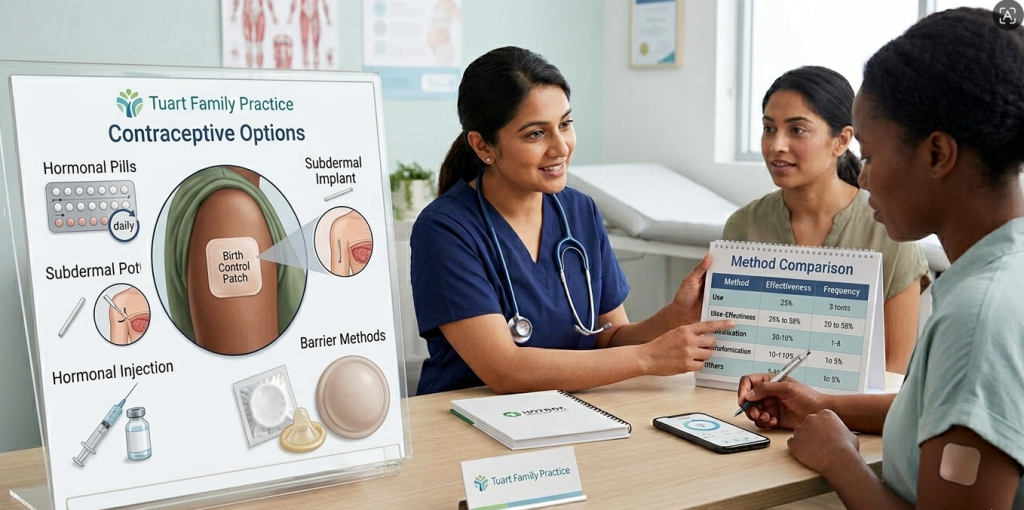
Birth control patch on skin with alternative contraceptive options like pills and implants

Birth Control Patch and Alternative Contraceptive Options Explained

Introduction Birth control patch and alternative contraceptive options provide a convenient and effective way to prevent pregnancy while supporting different lifestyle needs and health preferences. The birth control patch is a simple, easy-to-use hormonal method that is applied directly to the skin, allowing hormones such as estrogen and progestin to be absorbed into the bloodstream. These hormones work together to prevent ovulation, thicken cervical mucus to block sperm, and thin the uterine lining, significantly reducing the chances of pregnancy. Birth control patch and alternative contraceptive options are popular among individuals who prefer a low-maintenance solution without the need for daily pills. The patch is typically replaced weekly, making it a practical choice for those seeking consistency and convenience. In addition to its contraceptive benefits, the patch may also help regulate menstrual cycles, reduce period pain, and manage symptoms such as acne for some users. Beyond the patch, there are several other birth control methods available to suit varying needs. Options include oral contraceptive pills, long-acting methods such as implants and injections, and non-hormonal barrier methods like condoms and diaphragms. Some hormonal methods are specifically designed to stop or significantly reduce menstrual periods, while others are formulated as low estrogen birth control options for individuals who are sensitive to higher hormone levels or prone to side effects. Affordability is another key consideration, and many individuals seek cheap birth control options that remain both safe and effective. With a wide range of choices available, from short-term to long-term solutions, individuals can select a method that aligns with their budget, lifestyle, and reproductive goals. By understanding how the birth control patch works alongside other available options, individuals are better equipped to make informed, confident decisions about their sexual and reproductive health. What Is the Birth Control Patch? Benefits of the Birth Control Patch Other Birth Control Options Effectiveness of the Patch and Alternatives Important Considerations Frequently Asked Questions Conclusion & CTA The birth control patch is a flexible and effective option for preventing pregnancy, managing periods, and reducing hormonal side effects. Combined with other contraception methods, individuals can find a solution that fits their lifestyle, preferences, and budget. Call to Action: “Talk to your healthcare provider today to explore the birth control patch and other contraception options best suited for you.”

Birth Control Patch and Alternative Contraceptive Options Explained Read More »

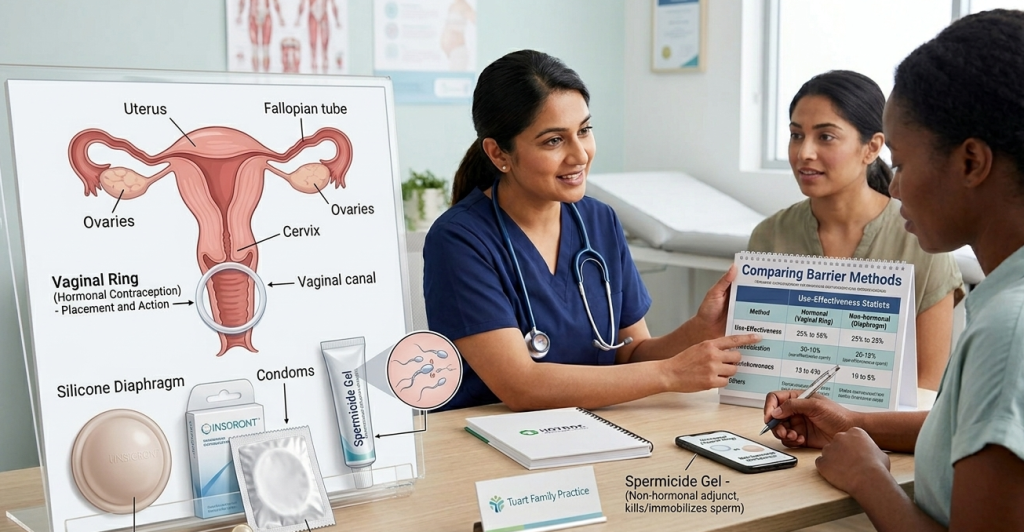
Barrier methods and vaginal ring birth control including condoms diaphragm and NuvaRing

Barrier Methods and Vaginal Ring Birth Control: Options, Benefits & Use

Introduction Barrier methods and vaginal ring birth control provide effective, flexible, and accessible options for preventing pregnancy, catering to individuals with different lifestyle needs and preferences. These methods work in distinct ways—barrier methods physically block sperm from reaching the egg, while the vaginal ring delivers a controlled release of hormones to prevent ovulation. Barrier methods and vaginal ring birth control options include widely used solutions such as condoms, spermicides, and diaphragm birth control, all of which are non-invasive and can be used on demand. Condoms, in particular, also offer protection against sexually transmitted infections, making them a popular dual-purpose option. Spermicides work by immobilising or destroying sperm, while diaphragms are inserted into the vagina to cover the cervix and prevent sperm from entering the uterus. In contrast, the vaginal ring—such as the NuvaRing—provides a longer-lasting hormonal contraceptive solution. It is inserted into the vagina and worn for several weeks, steadily releasing hormones that suppress ovulation, thicken cervical mucus, and thin the uterine lining. This “set-and-forget” approach makes it a convenient option for those who prefer not to manage contraception daily while still maintaining control over their reproductive health. Barrier methods and vaginal ring birth control each vary in effectiveness, ease of use, and level of user involvement. While barrier methods are ideal for occasional or situational use, the vaginal ring offers a more consistent and low-maintenance alternative. By understanding how these methods work, along with their benefits and potential considerations, individuals can make informed decisions that align with their health needs, comfort levels, and long-term reproductive goals. Barrier Methods of Birth Control Condoms Spermicide Diaphragm Birth Control Vaginal Ring Birth Control Benefits of Barrier Methods and Vaginal Ring Effectiveness of These Methods Important Considerations Possible Side Effects Frequently Asked Questions Q: Do condoms protect against STIs?A: Yes, condoms are the only method that also protects against STIs. Q: Can spermicide be used alone?A: Yes, but it is more effective when combined with other methods. Q: How does the vaginal ring work?A: It releases hormones that prevent ovulation and thicken cervical mucus. Q: Is the NuvaRing easy to use?A: Yes, it is inserted once a month and left in place for three weeks. Q: Can I combine barrier methods with the vaginal ring?A: Yes, using condoms with the ring provides additional protection. Conclusion & Call to Action Barrier methods and vaginal ring birth control provide flexible and effective options for preventing pregnancy. Whether you prefer hormone-free protection like condoms and diaphragms or a convenient hormonal method like the vaginal ring, there is a solution to suit your needs. Call to Action: Consult your healthcare provider to choose the best birth control method for your lifestyle and health needs.

Barrier Methods and Vaginal Ring Birth Control: Options, Benefits & Use Read More »

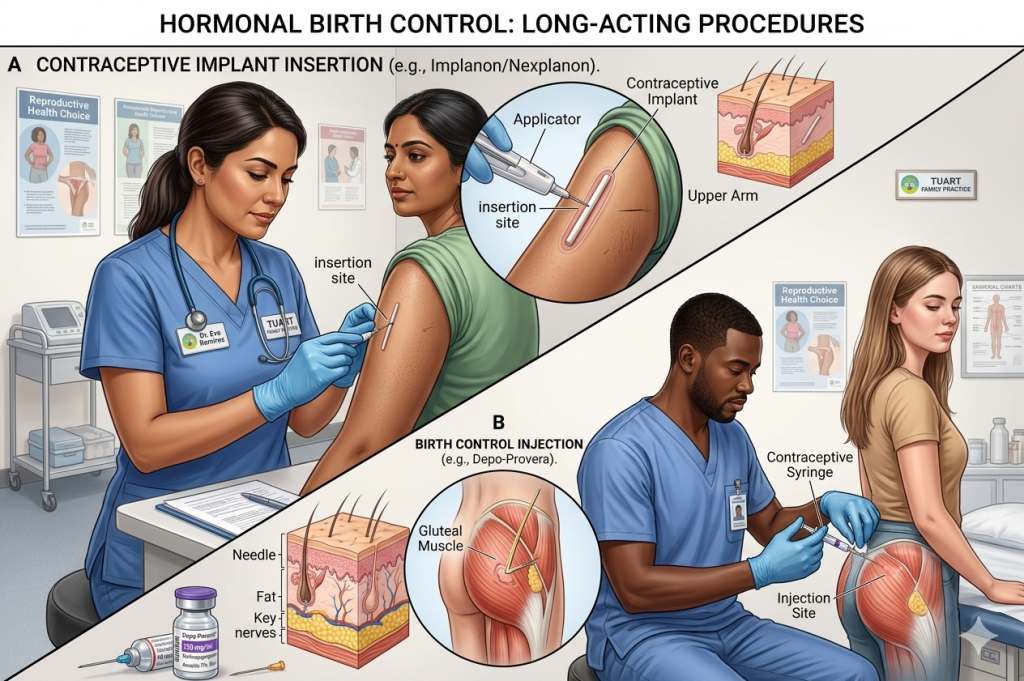
Hormonal birth control implant insertion and Depo shot injection in a clinical setting

Non Hormonal Birth Control Methods: Natural & Hormone-Free Options

Introduction Non hormonal birth control methods provide effective contraception without altering the body’s natural hormone levels, making them an ideal choice for individuals seeking a more natural or hormone-free approach to family planning. These options are especially suitable for those who experience side effects from hormonal contraceptives or have medical reasons to avoid hormone-based methods. There are several types of non hormonal birth control methods available, each offering different levels of effectiveness and convenience. Barrier methods such as condoms and diaphragms physically prevent sperm from reaching the egg, while also offering additional benefits like protection against sexually transmitted infections in the case of condoms. Long-term solutions, such as the copper intrauterine device (IUD), provide highly reliable contraception for several years by creating an environment that is toxic to sperm without using hormones. In addition to these methods, natural contraception techniques—including fertility awareness and natural family planning—allow individuals to monitor their menstrual cycles, body temperature, and other fertility signals to avoid pregnancy. These approaches require consistency and awareness but can be highly effective when used correctly. Non hormonal birth control methods offer flexibility and control, enabling individuals to choose an option that aligns with their personal preferences, health conditions, and reproductive goals. By understanding how each method works, along with its benefits and limitations, individuals can make informed and confident decisions about their sexual and reproductive health. What Is Non-Hormonal Birth Control? Types of Non-Hormonal Birth Control Barrier Methods Copper IUD (Non-Hormonal Device) Natural Methods Non-Hormonal Pills & Alternatives Natural Contraception and Family Planning Benefits of Non-Hormonal Birth Control Effectiveness of Hormone-Free Birth Control Important Considerations Frequently Asked Questions Q: What is the most effective non-hormonal birth control?A: The copper IUD is the most effective hormone-free option. Q: Are there non-hormonal birth control pills?A: Options are limited; most pills contain hormones, but natural alternatives exist. Q: Is natural family planning reliable?A: It can be effective with proper tracking and consistent use. Q: Do non-hormonal methods have side effects?A: They generally have fewer side effects compared to hormonal methods.Q: Which method is best for me?A: It depends on your lifestyle, health, and preferences—consult a healthcare provider for Conclusion & Call to Action Non-hormonal birth control offers a safe and effective alternative for individuals seeking hormone-free contraception. From barrier methods to natural family planning, there are multiple options to suit different lifestyles and preferences. Call to Action: Explore hormone-free birth control options today and consult a healthcare provider to find the best method for your needs.

Non Hormonal Birth Control Methods: Natural & Hormone-Free Options Read More »

A healthcare provider demonstrating contraceptive implant insertion and administering a birth control injection.

Hormonal Birth Control Implant and Injection: Benefits, Safety & Options

Introduction Hormonal birth control implant and injection methods provide highly effective, long-term contraception without the need for daily attention, making them a preferred choice for many individuals seeking reliable and low-maintenance options. Popular choices such as Implanon (a small, flexible rod inserted just under the skin of the upper arm) and the Depo-Provera injection are widely recognised for their convenience, effectiveness, and discreet nature. These hormonal methods work by steadily releasing progestin into the body, which prevents ovulation, thickens cervical mucus to block sperm, and thins the uterine lining to reduce the likelihood of implantation. As a result, they offer one of the most dependable forms of contraception available today. The contraceptive implant can remain effective for up to three years, while the injection is typically administered once every three months, ensuring consistent protection with minimal effort. Hormonal birth control implant and injection options are particularly suitable for individuals who may struggle with daily pills or prefer a “set and forget” approach to contraception. They are also reversible, meaning fertility generally returns after removal or when injections are stopped. Additionally, there are varying hormone dosages available, including low-dose options that may help minimise side effects such as irregular bleeding or hormonal fluctuations. With proper consultation and guidance from a qualified healthcare provider, individuals can choose the most suitable method based on their medical history, lifestyle, and reproductive goals. Understanding how hormonal birth control implant and injection methods work, along with their benefits and potential considerations, empowers individuals to make informed and confident decisions about their reproductive health. What Is Hormonal Birth Control? Implanon (Contraceptive Implant) Implanon Removal Birth Control Shot (Depo Shot) Benefits of Implants and Injections Possible Side Effects Choosing Between Implants and Injections Important Considerations Frequently Asked Questions Q: How effective is Implanon?A: Over 99% effective, making it one of the most reliable methods. Q: What is involved in Implanon removal?A: A simple, quick procedure performed by a trained professional. Q: How often do I need the birth control shot?A: Every 12 weeks (3 months). Q: Is the Depo shot safe?A: Yes, but it should be used under medical guidance due to possible side effects. Q: What is low dose birth control?A: Methods with lower hormone levels designed to reduce side effects while maintaining effectiveness. Conclusion & Call to Action Hormonal birth control options like Implanon and the Depo shot offer reliable, long-lasting contraception with minimal daily effort. Whether you prefer an implant or injection, these methods provide effective and flexible solutions tailored to different lifestyles. Call to Action: Consult your healthcare provider today to choose the best hormonal birth control option for your needs.

Hormonal Birth Control Implant and Injection: Benefits, Safety & Options Read More »

IUD birth control device T-shaped Mirena Kyleena copper contraception

IUD Birth Control: 7 Essential Facts Before Getting an IUD

Introduction An intrauterine device (IUD) is one of the most effective and long-lasting forms of birth control available today. IUD birth control is a small, T-shaped device inserted into the uterus by a healthcare professional to prevent pregnancy. It offers a convenient, low-maintenance solution for individuals seeking reliable, long-term contraception without the burden of daily routines or frequent medical visits. There are two main types of IUDs: hormonal options such as Mirena and Kyleena, and non-hormonal copper IUDs. Hormonal IUDs release small amounts of progestin, which thickens cervical mucus and thins the uterine lining to prevent fertilization. Copper IUDs use the natural sperm-repelling properties of copper to provide hormone-free protection. These devices can last several years — some up to a decade — making them a popular choice for those seeking effective, low-effort birth control. The insertion process is quick and performed by a healthcare provider. While some discomfort may occur, most individuals resume normal activities shortly after. Understanding how IUDs work, their benefits, possible side effects, and associated costs empowers individuals to make confident, informed decisions about their reproductive health. What Is IUD Birth Control? IUD birth control is a small, T-shaped device inserted into the uterus by a trained healthcare professional to prevent pregnancy. It is one of the most effective forms of contraception available, with a success rate of over 99%. Once inserted, it requires no daily attention, making it a popular low-maintenance option for women at any stage of life. Types of IUD Birth Control Hormonal IUDs Hormonal options such as Mirena and Kyleena release a small amount of progestin, which thickens cervical mucus and thins the uterine lining to prevent fertilisation. These are particularly beneficial for women who experience heavy or painful periods. Copper IUDs The copper IUD is a hormone-free alternative that uses the natural sperm-repelling properties of copper to prevent pregnancy. It is an excellent option for women who prefer to avoid hormones entirely and can last up to 10 years. How Long Does IUD Birth Control Last? Depending on the type, IUD birth control can provide protection for anywhere between 3 and 10 years. Mirena lasts up to 5 years, Kyleena up to 5 years, and copper IUDs can remain effective for up to a decade — making them one of the most cost-effective contraceptive choices over time. Getting an IUD — What to Expect Getting an IUD is a straightforward in-clinic procedure performed by a GP or specialist. The process typically involves: Most women return to normal daily activities within a day or two of getting an IUD. IUD Birth Control Cost in Australia The cost of IUD birth control in Australia varies depending on the type and your Medicare eligibility. Hormonal IUDs such as Mirena are listed on the Pharmaceutical Benefits Scheme (PBS), which significantly reduces the out-of-pocket cost. A consultation fee may also apply depending on your clinic’s billing arrangement. At Tuart Family Practice, we offer mixed billing options to make contraceptive care as accessible as possible for our patients in Baldivis. Learn more about our fees here. IUD Birth Control Side Effects Like all contraceptive methods, IUD birth control can have side effects. Common ones include: These symptoms typically settle within 3–6 months. If you experience severe pain or unusual symptoms, contact your GP promptly. Is IUD Birth Control Right for You? IUD birth control suits a wide range of women, including those who have never been pregnant, women who have completed their families, and those seeking long-term contraception without a daily routine. According to Family Planning Australia, IUDs are among the most effective reversible contraceptive methods available. Our experienced doctors at Tuart Family Practice are here to help you determine whether IUD birth control is the right fit for your lifestyle and health needs. Book a contraception consultation today.

IUD Birth Control: 7 Essential Facts Before Getting an IUD Read More »

Morning After Pill: Guide to ellaOne, Levonelle & Emergency Contraception

Introduction The morning after pill is a safe and effective form of emergency contraception used to prevent pregnancy after unprotected sex or a failure of regular birth control. Commonly known as the day after pill, next day pill, or simply an emergency pill, it provides a crucial second chance to reduce the risk of unintended pregnancy. Medications like ellaOne (ulipristal acetate) and Levonelle (levonorgestrel) are two of the most commonly used emergency pills worldwide, known for their effectiveness and accessibility. How the Morning After Pill Works The morning after pill works primarily by delaying or preventing ovulation, which is the release of an egg from the ovaries. If no egg is released, fertilization cannot occur. Some forms, particularly Levonelle, also slightly alter the cervical mucus to prevent sperm from reaching the egg. Timing is critical: the earlier the pill is taken, the higher its effectiveness. ellaOne can be taken up to 120 hours (5 days) after unprotected intercourse, while Levonelle is most effective within 72 hours (3 days). Choosing the Right Emergency Contraception Selecting between ellaOne and Levonelle depends on various factors including timing, availability, and personal health considerations. Many people search for terms like “ella Plan B” or “Plan B near me” when urgent contraception is required. ellaOne tends to be slightly more effective in the later part of the 5-day window, whereas Levonelle is widely available over the counter and can be purchased at many pharmacies. Consulting a healthcare professional can help determine which option is safest and most suitable. Effectiveness and Considerations The effectiveness of the morning after pill decreases with time after unprotected sex, so acting quickly is essential. While the pill is highly effective, it is not intended as a regular contraceptive method. Users should continue their normal birth control method afterward. Side effects are usually mild, including nausea, headaches, or changes in the menstrual cycle, and serious complications are rare. Emergency Contraception in Special Situations The morning after pill can also be used in situations like contraceptive failure, missed pills, condom breakage, or sexual assault. For breastfeeding mothers, Levonelle is generally considered safe, while ellaOne may require temporary interruption of breastfeeding for a short period. Copper IUDs can also serve as emergency contraception if inserted within 5 days of unprotected sex and are the most effective option. Accessibility and Legal Considerations Both ellaOne and Levonelle are widely accessible at pharmacies, clinics, and some online services. Understanding local regulations, age restrictions, and the need for prescriptions (for ellaOne in some regions) ensures timely access when emergency contraception is required. What Is ellaOne Emergency Contraception? ellaOne vs Levonelle (Plan B Options) ellaOne (Ulipristal Acetate) Levonelle (Levonorgestrel / Plan B) How Emergency Contraception Pills Work Where to Get Emergency Contraception Local pharmacies and drugstores Benefits of ellaOne and Levonelle Possible Side Effects Important Considerations Frequently Asked Questions Q: What is the difference between ellaOne and Plan B?A: ellaOne works up to 5 days after unprotected sex, while Plan B (Levonelle) is most effective within 3 days. Q: Is ellaOne more effective than Levonelle?A: It may be more effective closer to ovulation or when taken later within the 5-day window. Q: Can I get emergency contraception without a prescription?A: In many places, Levonelle is available over the counter, while ellaOne may require a prescription. Q: Where can I find Plan B near me?A: Check local pharmacies, clinics, or online providers. Q: Does ellaOne affect future fertility?A: No, it does not have a long-term effect on fertility. Conclusion & Call to Action ellaOne and Levonelle are reliable emergency contraception options that help prevent pregnancy when taken promptly. Understanding the differences between these pills ensures you can make the right choice in urgent situations.Call to Action: Find emergency contraception near you today and act quickly to ensure maximum effectiveness.

Morning After Pill: Guide to ellaOne, Levonelle & Emergency Contraception Read More »

Emergency Contraception: Morning After Pill Guide

Introduction Emergency contraception, commonly referred to as the morning-after pill, is a safe and effective method used to prevent pregnancy following unprotected sex or a failure of regular contraceptive methods. Known by various names, including the day-after pill, next-day pill, or simply emergency pill, this form of birth control offers a crucial second chance to reduce the risk of unintended pregnancy. It is a key option for individuals seeking urgent, time-sensitive protection. Emergency contraception works primarily by delaying or inhibiting ovulation, depending on the timing within the menstrual cycle. By temporarily preventing the release of an egg, it significantly reduces the likelihood of fertilization. Pills such as Plan B are most effective when taken as soon as possible after unprotected intercourse, ideally within 24 hours but up to 72 hours for optimal results. In addition to pills, certain copper intrauterine devices (IUDs) can also serve as emergency contraception when inserted shortly after exposure. Accessible, easy to use, and available in pharmacies and clinics, emergency contraception plays a vital role in reproductive health and family planning. Understanding how it works, the time-sensitive nature of its effectiveness, and potential side effects allows individuals to make informed decisions in urgent situations. Consulting a healthcare professional can provide additional guidance on safe use, ongoing contraception, and maintaining reproductive health. What Is Emergency Contraception? Types of Morning After Pills Levonorgestrel-Based Pills (e.g., Plan B) Ulipristal Acetate Pills How the Morning After Pill Works When to Take the Emergency Pill Effectiveness of Emergency Contraception Possible Side Effects Important Considerations Frequently Asked Questions Q: Is the morning after pill the same as an abortion pill? A: No, it prevents pregnancy and does not terminate an existing pregnancy. Q: How soon should I take the day after the pill? A: As soon as possible, ideally within 24 hours. Q: Can I take emergency contraception more than once? A: Yes, but it should not replace regular birth control methods. Q: Does the next day pill work if ovulation has already occurred? A: It may be less effective; other options may be recommended. Q: Do I need a prescription for the Plan B pill? A: In many places, it is available over the counter. Conclusion & Call to Action Emergency contraception provides a reliable backup option to prevent pregnancy after unprotected sex or contraceptive failure. Whether using the morning after pill, Plan B pill, or another emergency option, acting quickly is key to effectiveness. Call to Action: Get emergency contraception as soon as possible and consult a healthcare provider for guidance on the best option for you.

Emergency Contraception: Morning After Pill Guide Read More »

Mini Pill: Your Complete Guide to Progestin-Only Birth Control

Introduction The mini pill, also known as the progestin-only pill, is a widely used and effective form of hormonal contraception, particularly for individuals who cannot take estrogen. Unlike the combined pill, the mini pill contains only progestin, making it a suitable choice for breastfeeding mothers, women with certain health conditions, or those sensitive to estrogen-related side effects. Its targeted hormone composition provides a reliable contraceptive option while minimizing risks associated with estrogen use. The mini pill works primarily by thickening the cervical mucus, which prevents sperm from reaching the egg, and in some cases, it may also suppress ovulation. Its effectiveness relies on consistent daily intake at the same time each day, emphasizing the importance of adherence to achieve optimal pregnancy prevention. Brands such as Cerelle have gained popularity for providing reliable protection with fewer hormone-related side effects, making them a convenient choice for many. Beyond contraception, the mini pill may offer additional benefits such as lighter, more regular periods and reduced menstrual discomfort for some users. Understanding how the progestin-only pill functions, its advantages, potential side effects, and correct usage is essential for safe and effective family planning. Consulting a healthcare professional ensures that individuals choose the pill that best suits their health needs and lifestyle, promoting overall reproductive health and well-being. What Is the Mini Pill? Types of Progestin-Only Birth Control Pills Keywords: progesterone only pill, progestin only birth control How the Mini Pill Works Benefits of the Mini Pill Who Should Consider the Mini Pill? Possible Side Effects Tips for Taking the Mini Pill Effectively Frequently Asked Questions Q: How effective is the mini pill? A: It is over 99% effective with perfect use but less effective if taken inconsistently. Q: What happens if I take the mini pill late? A: Even a delay of a few hours can reduce effectiveness; follow guidelines or use backup contraception. Q: Is the mini pill safe for breastfeeding? A: Yes, it is commonly recommended for breastfeeding women. Q: What is the difference between the mini pill and combined pill? A: The mini pill contains only progestin, while the combined pill includes both estrogen and progestin. Q: Can I switch from another birth control method to the mini pill? A: Yes, but it’s best to consult a healthcare provider for proper guidance. Conclusion & Call to Action The mini pill is a safe, effective, and flexible birth control option, especially for those who cannot take estrogen. With options like the Cerelle pill, progestin-only birth control provides reliable protection when used correctly. Call to Action: Speak to your healthcare provider today to see if the mini pill is the right contraceptive option for you.

Mini Pill: Your Complete Guide to Progestin-Only Birth Control Read More »

Birth Control Pills

Birth Control Pills: Your Complete Guide

Introduction Birth control pills, commonly referred to as “the pill,” are one of the most widely used and effective forms of contraception across the globe. These oral contraceptive pills function primarily by regulating hormone levels in the body to prevent ovulation, which in turn significantly reduces the likelihood of pregnancy. The pill offers a reliable and reversible method of birth control when taken consistently and correctly, making it a popular choice among individuals seeking control over their reproductive health. There are several types of contraceptive pills available to suit different health needs and lifestyles. The most common are the combined oral contraceptive pills, which contain both estrogen and progestin, and progestin-only pills, which are often recommended for individuals who may have contraindications to estrogen. Beyond preventing pregnancy, many individuals choose the pill for its additional health benefits, such as regulating irregular menstrual cycles, reducing acne, minimizing heavy menstrual bleeding, and alleviating period-related symptoms like cramps and mood swings. With a variety of brands and formulations available on the market, selecting the most suitable contraceptive pill requires careful consideration of individual health conditions, lifestyle factors, and medical guidance. Consulting a healthcare professional is essential to ensure safe use, understand potential side effects, and determine the most effective option for long-term reproductive health. By gaining a clear understanding of how the pill works and its benefits, individuals can make informed decisions to support both contraception and overall well-being. What Are Birth Control Pills? Keywords: birth control pills, oral contraceptive pills. Combined Pill Progestin-Only Pill (Mini Pill) How the Pill Works Keywords: the pill, oral contraceptive pills Choosing the Best Contraceptive Pill Keywords: best contraceptive pill, contraceptive pill Benefits of Birth Control Pills Possible Side Effects Tips for Taking the Pill Effective Frequently Asked Questions Q: How effective are birth control pills? A: Over 99% effective with perfect use, but around 91% with typical use. Q: What is the difference between the combined pill and mini pill? A: The combined pill contains estrogen and progestin, while the mini pill contains only progestin. Q: Can I choose the best contraceptive pill myself? A: It’s best to consult a healthcare provider for personalized recommendations. Q: What happens if I miss a pill? A: Follow instructions provided with your medication or consult a healthcare provider. Q: Can the pill be used for reasons other than contraception? A: Yes, it is often used to manage hormonal conditions and menstrual issues. Conclusion & Call to Action Birth control pills remain one of the most effective and convenient contraception methods available today. Whether you choose the combined pill or another option, understanding how oral contraceptive pills work helps ensure safe and effective use. Call to Action: Speak to your healthcare provider today to find the best contraceptive pill for your needs and lifestyle.

Birth Control Pills: Your Complete Guide Read More »

<