


Introduction
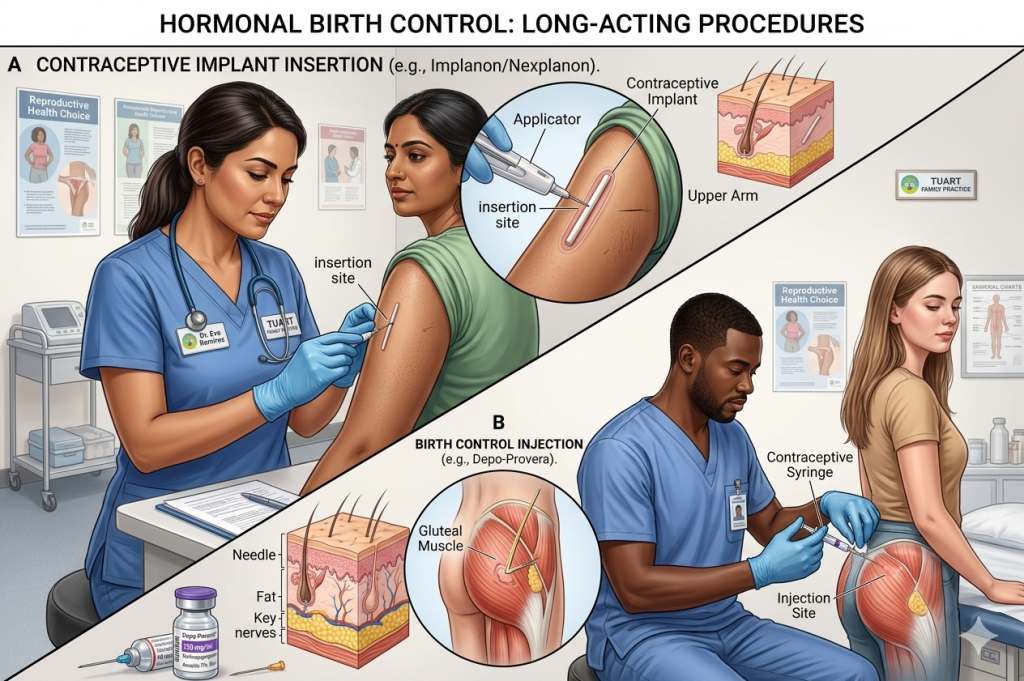
Hormonal birth control implant and injection methods provide highly effective, long-term contraception without the need for daily attention, making them a preferred choice for many individuals seeking reliable and low-maintenance options. Popular choices such as Implanon (a small, flexible rod inserted just under the skin of the upper arm) and the Depo-Provera injection are widely recognised for their convenience, effectiveness, and discreet nature.
These hormonal methods work by steadily releasing progestin into the body, which prevents ovulation, thickens cervical mucus to block sperm, and thins the uterine lining to reduce the likelihood of implantation. As a result, they offer one of the most dependable forms of contraception available today. The contraceptive implant can remain effective for up to three years, while the injection is typically administered once every three months, ensuring consistent protection with minimal effort.
Hormonal birth control implant and injection options are particularly suitable for individuals who may struggle with daily pills or prefer a “set and forget” approach to contraception. They are also reversible, meaning fertility generally returns after removal or when injections are stopped. Additionally, there are varying hormone dosages available, including low-dose options that may help minimise side effects such as irregular bleeding or hormonal fluctuations.
With proper consultation and guidance from a qualified healthcare provider, individuals can choose the most suitable method based on their medical history, lifestyle, and reproductive goals. Understanding how hormonal birth control implant and injection methods work, along with their benefits and potential considerations, empowers individuals to make informed and confident decisions about their reproductive health.
What Is Hormonal Birth Control?
- Uses hormones to prevent pregnancy
- Works by stopping ovulation and thickening cervical mucus
- Available in different forms: pills, implants, injections, patches
- Low dose options available to minimize side effects
Implanon (Contraceptive Implant)
- A small, flexible rod inserted under the skin of the upper arm
- Releases progestin hormone continuously
- Effective for up to 3 years
- Over 99% effective
Implanon Removal
- Performed by a healthcare professional
- Quick procedure under local anesthesia
- Fertility returns quickly after removal
Birth Control Shot (Depo Shot)
- Injection given every 3 months
- Contains progestin hormone
- Prevents ovulation and thickens cervical mucus
- Convenient for those who prefer less frequent dosing
Benefits of Implants and Injections
- Highly effective (over 99% with correct use)
- Long-lasting and low maintenance
- No need for daily pills
- Suitable for individuals who cannot take estrogen
- Reversible contraception options
Possible Side Effects
- Irregular periods or spotting
- Weight changes (more common with Depo shot)
- Mood changes
- Headaches
- Delayed return to regular cycles (especially after injections)
Choosing Between Implants and Injections
- Implanon: long-term, one-time insertion, minimal maintenance
- Depo Shot: shorter-term, requires repeat injections every 3 months
- Consider lifestyle, convenience, and medical history
- Consult a healthcare provider for personalized advice
Important Considerations
- Does not protect against STIs
- Requires medical consultation for use
- Regular follow-ups may be needed
- Choose low dose birth control if sensitive to hormones
Frequently Asked Questions
Q: How effective is Implanon?
A: Over 99% effective, making it one of the most reliable methods.Q: What is involved in Implanon removal?
A: A simple, quick procedure performed by a trained professional.Q: How often do I need the birth control shot?
A: Every 12 weeks (3 months).Q: Is the Depo shot safe?
A: Yes, but it should be used under medical guidance due to possible side effects.Q: What is low dose birth control?
A: Methods with lower hormone levels designed to reduce side effects while maintaining effectiveness.
Conclusion & Call to Action
Hormonal birth control options like Implanon and the Depo shot offer reliable, long-lasting contraception with minimal daily effort. Whether you prefer an implant or injection, these methods provide effective and flexible solutions tailored to different lifestyles.
Call to Action: Consult your healthcare provider today to choose the best hormonal birth control option for your needs.